Solar Rebates in Victoria: What Melbourne Homes Can Claim in 2026

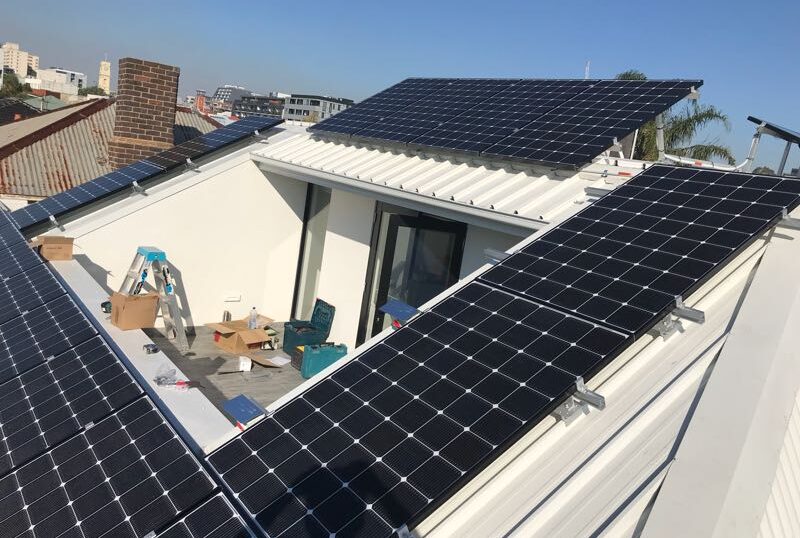
Short answer: in late 2026, most Melbourne homes can reduce the upfront cost of solar through two separate programs. The federal Small-scale Renewable Energy Scheme (STCs) discounts eligible solar panel systems and, through the Cheaper Home Batteries Program, eligible batteries. Solar Victoria’s Solar Homes Program offers an income-tested solar panel rebate of up to $1,400, with an optional interest-free loan. Each program has its own rules, and none of them is automatic.
This guide explains what each incentive does, who it is designed for, and the questions to ask before you accept a quote. Information is current as at 29 October 2026.
1. The federal solar panel discount (STCs)
When an eligible solar system is installed, it can create small-scale technology certificates (STCs). Most households assign these certificates to their retailer, who takes their value off the price. The number of certificates depends on three things:
- System size in kW – larger systems create more certificates.
- Your postcode zone – Melbourne sits in Zone 4, which has a lower rating than sunnier parts of Australia.
- The deeming period – the number of years left until the scheme ends in 2030. For systems installed in 2026 it is five years, and it falls by one year each 1 January.
As a worked example, a 6.6 kW system in a Zone 4 Melbourne postcode installed in 2026 would be entitled to roughly 39 STCs (6.6 × 1.185 × 5). STC prices move with the market, so the dollar value appears on your quote rather than as a fixed amount.
To be eligible, the system must use approved products and be designed and installed by people accredited with Solar Accreditation Australia.
2. The Cheaper Home Batteries Program
Since 1 July 2025, eligible home and small business batteries can also create STCs. The Australian Government describes the discount as around 30% of the upfront cost for a range of battery sizes. Changes that started on 1 May 2026 mean the support now declines every six months and tapers for larger batteries, so the discount depends on both the installation date and the battery’s usable capacity.
Key conditions include:
- The battery must be paired with a new or existing solar system.
- The battery and its inverter must be on the Clean Energy Council’s approved product lists.
- On-grid systems must be capable of joining a virtual power plant (VPP), although joining one is optional.
- The installer must hold the relevant Solar Accreditation Australia battery accreditation.
If you are considering storage, our solar battery installation page explains how we assess compatibility with an existing system.
3. Solar Victoria’s Solar Homes solar panel rebate
Solar Victoria offers a solar panel (PV) rebate of up to $1,400 for eligible households, plus the option of an interest-free loan. From 1 July 2026, the combined household income cap for the solar panel and hot water rebates changed from $210,000 to $150,000 per year. Solar Victoria said rebate values were unchanged.
Other points worth knowing:
- You need to obtain eligibility before installation. Solar Victoria states that if the system is installed before eligibility is approved, no rebate is paid.
- You must use a Solar Victoria authorised retailer and a product on Solar Victoria’s product list.
- Property and previous-rebate tests also apply, so check the current criteria on the official site.
Solar Victoria’s former battery loan is no longer open to new applications, so in 2026 battery support for most Melbourne homes comes through the federal program.
Can you combine the incentives?
In many cases, yes. The federal STC discount and the Solar Homes rebate are separate programs, and a household installing panels and a battery together may be eligible for the federal panel discount, the federal battery discount and, if eligible, the Solar Victoria panel rebate. Eligibility is assessed for each program separately, so one approval does not guarantee another.
A checklist before you sign
- Ask the retailer to show each incentive as a separate line on the quote.
- Confirm the STC calculation uses your postcode zone and the expected installation date.
- For a battery, ask for the usable capacity and the exact STC entitlement.
- Check the installer’s Solar Accreditation Australia details.
- If you are applying to Solar Victoria, wait for eligibility approval before installation.
- Ask what happens to the price if installation moves into a new calendar year or battery period.
Frequently asked questions
Is the Victorian solar rebate still available?
Solar Victoria’s website continues to list the solar panel rebate and loan for eligible households. Because releases and criteria can change, check the official site on the day you apply.
Do renters qualify?
Solar Victoria runs a separate rebate stream for rental properties. Landlords should review those specific criteria.
Will the federal discount be smaller next year?
Yes for solar panels: the deeming period falls by one year on 1 January 2027. Battery support also steps down on a set schedule. That said, the right time to install depends on your needs, not just the rebate.
Do I apply for STCs myself?
Usually not. Most households assign their STCs to the retailer, who applies the discount at the point of sale.
Talk it through with a local installer
Cosmic Solar designs and installs residential solar systems across Melbourne. If you would like a quote that shows each incentive clearly, contact our team and we will explain what applies to your property.
Sources
- Solar Victoria – Solar Homes Program continuing to provide targeted assistance (checked 29 Oct 2026)
- Solar Victoria – Solar panel rebate (checked 29 Oct 2026)
- DCCEEW – Cheaper Home Batteries Program (checked 29 Oct 2026)
- Clean Energy Regulator – Calculate STC entitlements (checked 29 Oct 2026)
This article is general information, not financial or legal advice. Incentive rules change, so confirm eligibility with the relevant program before you commit.