What Size Solar System Do I Need for a Melbourne Home?

Short answer: start with your electricity bills, not a standard system size. Find your average daily use in kilowatt-hours (kWh), then remember that each kilowatt of solar panels in Melbourne produces about 3.6 kWh a day on average across the year. Roof space, budget, future plans (a battery, an EV or electric heating) and network export limits then shape the final recommendation.
Step 1: Find your daily usage
Your bill shows total usage for the billing period. Divide it by the number of days to get average daily use. If you can, look at a full year, because Melbourne households often use more electricity in winter for heating and lighting.
Your retailer’s online portal may also show half-hourly data from your smart meter. That is useful because it shows when you use power, which matters for solar.
Step 2: Estimate output in Melbourne
Australian Government guidance puts typical daily output at about 3.5 to 5 kWh per kW of panels, depending on location. Melbourne sits at the lower end, around 3.6 kWh per kW per day on an annual average. Output is much higher in summer and much lower in winter.
| System size | Approx. average daily output in Melbourne |
|---|---|
| 5 kW | about 18 kWh |
| 6.6 kW | about 24 kWh |
| 10 kW | about 36 kWh |
These are averages for a well-oriented, unshaded roof. Real output depends on orientation, tilt, shading and equipment.
Step 3: Think about self-consumption
Since Victoria’s minimum feed-in tariff ended on 1 July 2025, retailers set their own export rates, and many are low. That means the value of solar comes mostly from the electricity you use yourself while the sun is shining. A system sized only to match annual usage can export a lot in summer and still leave you buying power in the evening.
Good ways to improve self-consumption include running dishwashers, washing machines and pool pumps during the day, heating water with a timer, and adding a battery later.
Step 4: Plan for the future
- Battery: if you may add storage, a slightly larger array gives more surplus to charge it, especially in cooler months.
- Electric vehicle: daytime charging at home can use a large share of solar output.
- Going all-electric: replacing gas heating or hot water increases electricity use.
Step 5: Check roof and network limits
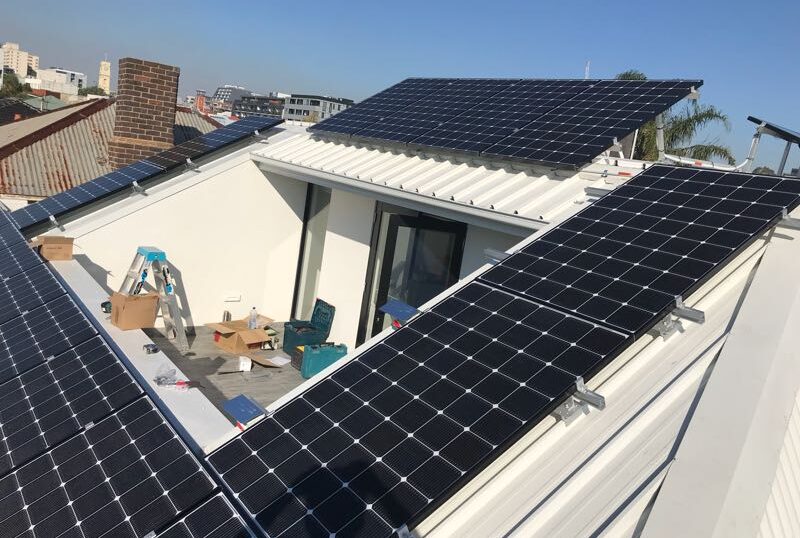
Your roof area, shading and orientation set a practical maximum. Your local distribution network also has connection rules, including export limits, and new systems in Victoria must meet emergency backstop requirements. Your installer should confirm these before finalising the design.
A worked example
A household using 18 kWh a day, mostly mornings and evenings, might find a 6.6 kW system produces roughly 24 kWh on an average day. Without changing habits, much of that would be exported in summer. Shifting appliances into daylight hours, or adding a battery sized to evening use, helps the household use more of its own solar.
Frequently asked questions
Is 6.6 kW still the standard size?
It is common, but not automatically right. Many Melbourne homes now consider larger systems to support batteries, EVs or electric heating, subject to roof space and network approval.
Should I size for winter or summer?
Most designs balance the two. Sizing purely for winter can mean heavy summer exports; sizing for summer can leave winter shortfalls.
Does a bigger system increase rebates?
The federal STC discount is based on system size, so larger systems create more certificates. Solar Victoria’s rebate has a fixed maximum.
Get a design based on your data
Cosmic Solar designs residential solar around your usage and roof. Learn about our solar panel installation process, read our guide to Victorian solar rebates, or request a quote with your latest bill.
Sources
- Australian Government – energy.gov.au Solar (checked 29 Oct 2026)
- Essential Services Commission – Minimum feed-in tariff (checked 29 Oct 2026)
- Energy Victoria – Emergency backstop mechanism for solar (checked 29 Oct 2026)