Cheaper Home Batteries Program: A Melbourne Homeowner’s Guide

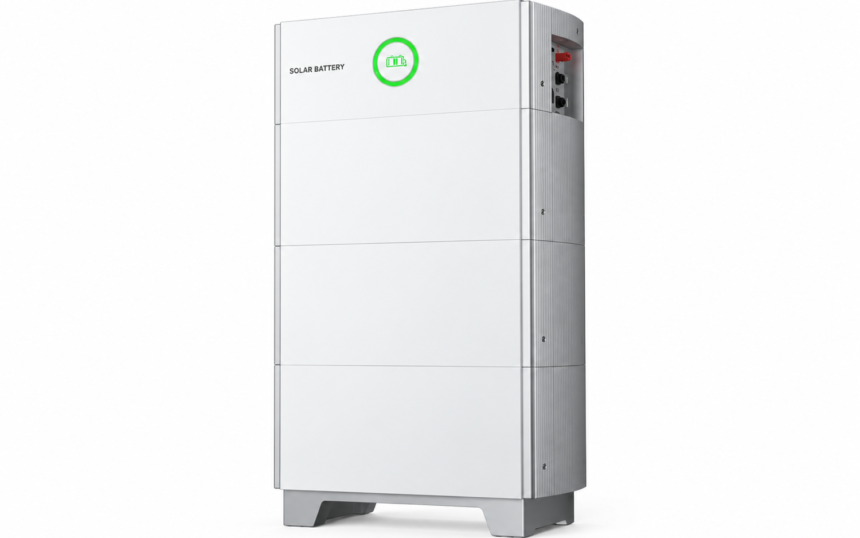
Short answer: the Cheaper Home Batteries Program reduces the upfront price of an eligible home battery by creating small-scale technology certificates (STCs) based on the battery’s usable capacity. For Melbourne households it is currently the main government support for batteries. Since 1 May 2026, the support steps down every six months and tapers for larger batteries, so the size you choose and the date it is installed both affect the discount.
How the discount is calculated
Each eligible battery can create a set number of STCs per kilowatt-hour (kWh) of usable capacity. This number is called the STC factor. Your installer or their registered agent creates and sells the certificates, and the value is taken off your invoice.
For installations from May to December 2026, the factor is widely reported as 6.8 STCs per usable kWh for the first 14 kWh, with a lower rate for capacity above that. As an illustration, a battery with 10 kWh of usable capacity installed in that period would create about 68 STCs. The dollar value depends on the STC price on the day, which is why quotes vary slightly.
The Australian Government says the goal of the May 2026 changes is to keep the discount at around 30% across a range of battery sizes while battery prices fall.
What makes a battery eligible?
- Paired with solar. The battery must connect to a new or existing solar PV system.
- Approved equipment. The battery, and the inverter it connects to, must be on the Clean Energy Council’s approved product lists.
- VPP-capable. On-grid batteries must be capable of joining a virtual power plant. You are not required to join one.
- Accredited installer. The installer must hold Solar Accreditation Australia accreditation for battery systems.
- Size. The program supports small-scale batteries up to 100 kWh, with support tapering as capacity increases.
Usable capacity versus nominal capacity
Battery brochures often quote a headline capacity, but the discount is based on usable capacity – the energy you can actually draw out under normal operation. When comparing quotes, ask each retailer to list the usable capacity and the number of STCs separately. Two batteries with the same headline size can produce different discounts.
Is a bigger battery always better?
Not necessarily. Because support tapers above 14 kWh, an oversized battery gives you less discount per kWh and may sit partly unused, especially through a Melbourne winter when there is less surplus solar to store. A well-sized battery is usually matched to your evening and overnight use, your solar system size and whether you want backup power.
Our solar batteries page outlines the battery brands we work with, and our installation packages show common inverter and battery combinations.
Timing: the six-monthly step-downs
The STC factor reduces on a published schedule. If your installation is booked close to a step-down date, ask the retailer how the price will be handled if the job moves into the next period. A clear contract should state which figure applies.
Can I combine it with Victorian incentives?
Solar Victoria’s battery loan is no longer open to new applications. If you are installing new solar panels at the same time, the Solar Homes solar panel rebate may apply to the panels if you meet its criteria. We cover this in our guide to solar rebates in Victoria.
Questions to ask before you buy
- What is the usable capacity, and how many STCs will it create?
- Is my existing inverter compatible, or will it need replacing?
- Is the battery and inverter combination on the approved list?
- Can the system provide backup power, and which circuits would it cover?
- What warranty applies, and what does it say about throughput or cycles?
Frequently asked questions
Is the battery discount means-tested?
No income test applies to the federal battery discount. Eligibility depends on the system, products and installer.
Do I have to join a virtual power plant?
No. The battery must be capable of joining one, but participation is your choice.
Can I add a battery to an older solar system?
Often yes, depending on the inverter and setup. The existing panels do not need to be on the current approved list, but the inverter the battery connects to must meet the program’s requirements.
Get a battery assessment
Cosmic Solar provides solar battery installation across Melbourne. Get in touch and we will review your usage and existing system before recommending a size.
Sources
- DCCEEW – Cheaper Home Batteries Program (checked 29 Oct 2026)
- Clean Energy Regulator – Solar batteries (checked 29 Oct 2026)
- Clean Energy Council – Battery programs and approved products (checked 29 Oct 2026)
General information only. Confirm the current STC factor and eligibility with your installer before signing.