What Size Solar Battery Do I Need? A Practical Melbourne Guide

Short answer: size a battery to the electricity you use after the sun goes down, not your whole daily usage. For many Melbourne homes that means looking at usage from late afternoon to early morning, checking how much surplus solar is available to charge the battery across the seasons, and deciding whether backup power matters.
1. Measure your evening and overnight use
If you have a smart meter, your retailer’s portal can show usage by time of day. Add up typical use from around 4 pm to 7 am. This is the energy a battery could realistically supply. Many households find this is a little over half of their daily use, but your own data is what counts.
2. Check how much surplus solar you have
A battery only helps if your panels can fill it. In a Melbourne summer, a typical system often produces more than enough. In winter, output can drop to well under half of the summer figure, so a large battery may rarely fill. If your solar system is small, the panels may be the limiting factor rather than the battery.
3. Decide whether you want backup
Some battery systems can keep selected circuits running during a grid outage. Backup depends on the battery, the inverter and how the switchboard is wired. If backup matters, you may want extra capacity in reserve. We cover this further in our guide to solar battery installation.
4. Understand usable capacity
Compare batteries using usable capacity, not nominal capacity. Also look at continuous power output in kW: a battery with plenty of stored energy may still struggle to run several large appliances at once if its power rating is low.
5. Consider how the discount works
Under the Cheaper Home Batteries Program, support tapers for capacity above 14 kWh. A larger battery may still be the right choice, but the discount per kWh is lower beyond that point. Our battery program guide explains how the discount is calculated.
A simple worked example
A household uses about 11 kWh between late afternoon and morning and has a 6.6 kW solar system. A battery with around 10 kWh of usable capacity could cover much of that use on sunny days, while accepting that some winter days will not fully charge it. Planning for an EV or electric heating would change the answer.
Modular batteries give room to grow
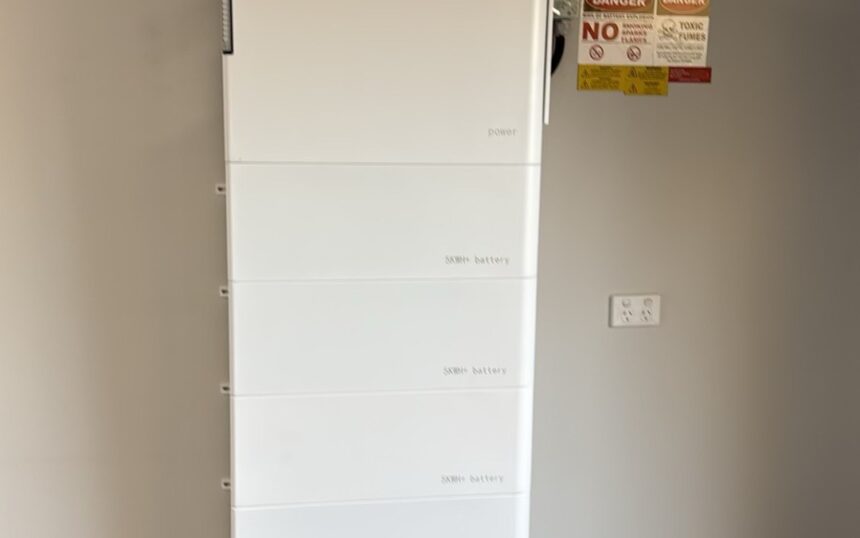
Many current batteries are stackable, so you can add modules later. Before relying on this, check that the expanded configuration will be on the approved product list and that the inverter can handle it. Our installation packages show several modular options.
Frequently asked questions
Is a 13 kWh battery the standard size?
It is a common size, but not a rule. Smaller households may need less; larger homes with EVs may need more.
Can a battery take me off the grid?
For a typical Melbourne home, going fully off-grid would need far more storage and generation, especially in winter. Most battery owners stay connected.
Does a battery need to be the same brand as my inverter?
Not always, but compatibility is essential. Some batteries require a specific hybrid inverter.
Get sizing advice
Browse the batteries we supply or send us your usage data and we will recommend a battery size that fits your home.
Sources
- DCCEEW – Cheaper Home Batteries Program (checked 29 Oct 2026)
- energy.gov.au – Solar (checked 29 Oct 2026)