Types of Solar Inverters: String, Hybrid and Microinverters Compared

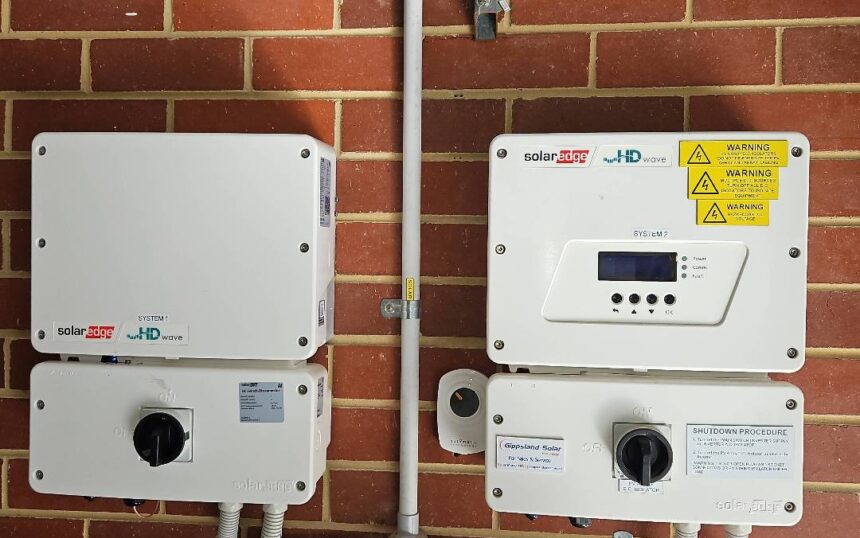
Short answer: a string inverter is a single central unit and suits simple, unshaded roofs. A hybrid inverter does the same job but can also manage a battery. Microinverters (or panel-level optimisers) handle each panel individually, which can help on shaded or complex roofs. The right choice depends on your roof, your plans for storage and your budget.
What an inverter does
Solar panels produce direct current (DC). Your home and the grid use alternating current (AC). The inverter converts one to the other, manages how the system interacts with the grid, and usually provides monitoring data. In Victoria, new and replacement systems must also support the emergency backstop, which requires compatible communication capability.
String inverters
Panels are wired together in one or more strings that feed a central inverter.
- Good for: roofs with consistent sun and simple layouts.
- Watch for: shading on part of a string can reduce output from the whole string, although many modern inverters have multiple inputs (MPPTs) that help.
Hybrid inverters
A hybrid inverter connects to panels and a battery. It decides when to charge, discharge, export or import.
- Good for: households installing a battery now or planning one soon.
- Watch for: battery compatibility is brand-specific. Under the Cheaper Home Batteries Program, the inverter a battery connects to must meet approval and VPP-capability requirements.
Microinverters and optimisers
Microinverters sit behind each panel and convert power at the panel. Optimisers condition each panel’s output before it reaches a central inverter.
- Good for: roofs with partial shade, several orientations or limited space.
- Watch for: higher upfront cost and more components on the roof. Battery integration needs a compatible approach.
Quick comparison
| String | Hybrid | Micro / optimiser | |
|---|---|---|---|
| Partial shading | More affected | More affected | Less affected |
| Battery ready | Needs extra hardware | Yes, with compatible batteries | Depends on system |
| Monitoring | System level | System and battery | Panel level |
Sizing the inverter
Inverters are often slightly smaller than the panel array because panels rarely produce their full rated output. Network rules and export limits also influence sizing, so your installer should explain the ratio in your design.
Frequently asked questions
Do I need a hybrid inverter to add a battery later?
Not always. An AC-coupled battery with its own inverter can be added to many existing systems. A hybrid can be simpler if you plan a battery soon.
How long do inverters last?
Inverters usually have shorter warranties than panels. Check the warranty term and the manufacturer’s Australian support.
Which brands do you install?
See our solar inverters page for the brands we work with.
Choose with confidence
Our solar inverter installation team can assess your roof and goals. If you are also weighing up storage, read how to size a solar battery or contact us.
Sources
- Clean Energy Regulator – Solar batteries (checked 29 Oct 2026)
- Energy Victoria – Emergency backstop mechanism (checked 29 Oct 2026)